
The story behind The Three Tenors in Concert by Carreras, Domingo, Pavarotti
Hello and welcome to VinylCast.
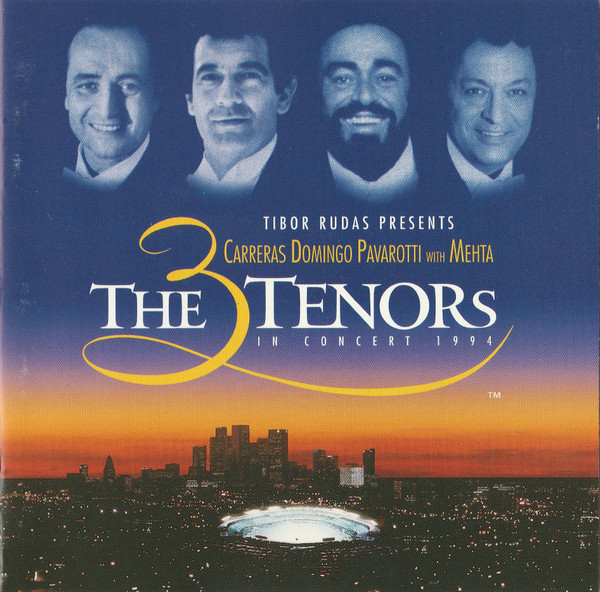
It is the humid evening of July 7, 1990, among the ancient ruins of the Baths of Caracalla in Rome. The air vibrates not just with summer heat, but with the roar of World Cup football fever. While the rest of the planet focused on the upcoming final match, a frenzy was taking place at the gates. Over one hundred thousand people had clamored for tickets to a venue that could only hold six thousand. Those lucky few turned their backs on the stadium to witness an acoustic experiment that purists dismissed as a commercial circus. This is the story of the accidental phenomenon that became The Three Tenors in Concert by José Carreras, Plácido Domingo, and Luciano Pavarotti.
The existence of this album is a miracle of human resilience. For decades, these titans were fierce professional rivals, reportedly refusing fifty offers to perform together. The catalyst for this truce was not a massive paycheck, but a brush with death. Conceived by Italian producer Mario Dradi, the event was a fundraiser for the José Carreras International Leukemia Foundation, serving as an emotional welcome back for Carreras after his grueling, life-saving treatment.
Under the baton of Zubin Mehta, the stage was packed with two hundred musicians from the Maggio Musicale Fiorentino and the Teatro dell'Opera di Roma. Because classical literature contains zero works written for three tenors, they had to invent a new format. They turned to Lalo Schifrin, the composer famous for the suspenseful Mission: Impossible theme. Schifrin arranged a unique twenty-minute medley, turning the concert into a friendly musical slugfest where the singers traded lines on songs ranging from "O Sole Mio" to Broadway hits, playfully trying to outdo one another’s lung capacity.
The emotional climax arrived with "Nessun Dorma," a track that had already saturated the globe as the BBC’s World Cup theme. The aria was performed twice: first by Pavarotti alone, and again as an encore where all three voices joined for the final "Vincerò."
The recording was an instant cultural earthquake. It won the Grammy Award for Best Classical Vocal Performance and became the best-selling classical album of all time. However, it holds a bitter secret. Believing this was a one-off charity gig, the trio accepted relatively small flat fees, unknowingly waiving their royalty rights on an album that sold over twelve million copies. Resentment brewed, with Pavarotti’s manager later revealing a secret $1.5 million side-payment from Decca that the others never saw. This mix of massive artistic reach and financial ruthlessness changed the industry forever, birthing the genre of "Popera" and proving that opera could indeed fill stadiums.
Thanks for listening to this podcast, provided to your ears by VinylCast.
Production Personnel & Credits
Musicians, producers, engineers and design credited on this album.
Why this album ranks #85 in our Top 100
The Three Tenors in Concert sits at #85 in the VinylCast Top 100 best-selling US vinyl albums (1960–2010), and #1 within Classical, Folk, World, & Country. The ranking reconciles RIAA certified shipments with Luminate (Nielsen SoundScan) point-of-sale data, with manual reconciliation for catalog re-releases. See the full Top 100 with methodology.
More Classical, Folk, World, & Country from the Top 100

Frequently asked questions
How was The Three Tenors in Concert by Carreras, Domingo, Pavarotti made?
Listen to the full VinylCast episode above for the verified creation story of The Three Tenors in Concert by Carreras, Domingo, Pavarotti, sourced from published recording-session accounts.